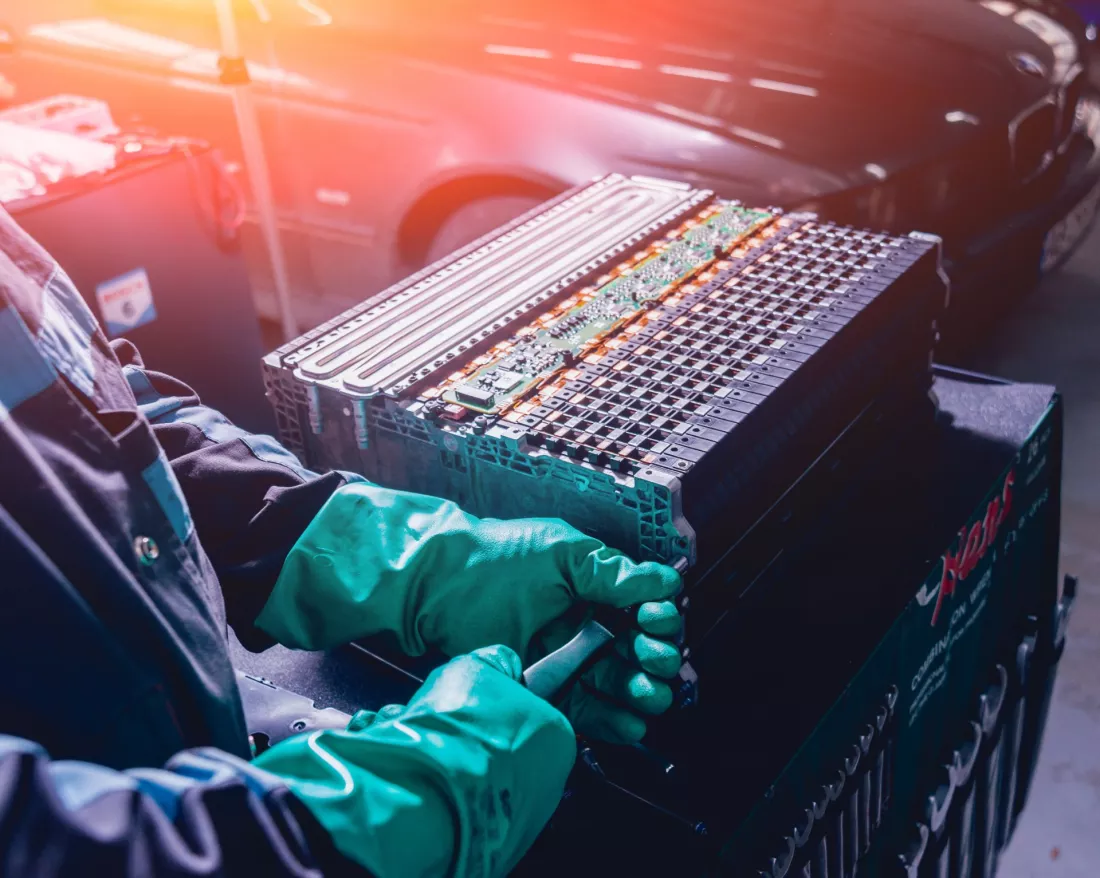
An electric car battery that can no longer power a vehicle is not rubbish at all – it is a small mine of lithium, cobalt, nickel and manganese. The European BATRAW project, coordinated by Leitat, has shown step by step how robots, AI cameras, lasers, clever chemistry and a blockchain passport can turn worn-out packs into high-quality materials for brand-new batteries – and at the end you can find out how much of a circular economy engineer there is in you.
Europe wants to become the world’s first climate-neutral continent, and the European Commission has set a bold goal along the way: 46% electrification by 2040. More electric cars, buses and storage systems mean lower emissions and less reliance on imported fossil fuels. But every one of those batteries will one day reach the end of its working life.
“Europe's electrification will generate increasing volumes of battery waste while simultaneously increasing demand for critical raw materials like lithium, cobalt, nickel and manganese,” explains Angel Manuel Escamilla Pérez, principal researcher at Leitat. In other words, the problem and the solution may be sitting in the same box.
BATRAW is an EU-funded project coordinated by Leitat that brought together partners from across Europe. Their shared aim was to build a sustainable, circular value chain for end-of-life lithium-ion batteries, such as the ones that drive electric vehicles. Instead of tackling a single step, the team looked at the whole journey of a battery, from collection and diagnostics to the moment its materials are ready to be used again.
Taking apart an electric car battery pack is slow, fiddly and potentially dangerous work. BATRAW developed a semi-automated disassembly line that combines robotics, vision systems based on artificial intelligence and laser cutting. The cameras help the machines recognise what they are looking at, while the laser opens the pack precisely and safely.
In pilot demonstrations the line cut dismantling times by 50–60%. It also optimised the manual operations that still need human hands and made the job safer for workers. For anyone interested in robotics or machine vision, this is a very practical example of where those skills end up.
Once a pack has been dismantled, the valuable metals still have to be separated. Here the project turned to hydrometallurgy, a branch of chemistry that uses solutions to dissolve and recover metals. In a pilot-scale demonstration under industrially relevant conditions, the process recovered more than 98% of the target raw materials.
“By integrating these two pilot plants, we reduced dismantling times, improved safety and, at the end of the hydrometallurgical process, delivered high-quality recovered materials that can now be used to produce new cathode and anode materials,” says Escamilla. The loop, in short, closes: an old battery becomes the starting point for a new one.
Recycling is not the only option. The researchers also asked whether some batteries could keep working in a different role before their metals are recovered. Based on the project’s work, a used battery can follow several paths:
The quick health check matters because it helps decide which batteries still have useful capacity and which should go straight to recycling.
Alongside its recovery and recycling technologies, BATRAW helped implement a digital battery passport and a traceability platform built on blockchain. It records where a battery and its materials have been and what has happened to them.
“By tracking batteries and battery materials at all stages, our passport, together with the traceability platform, helps identify weaknesses in the value chain while also making it easier for recyclers to extract critical raw materials and drive the circular economy,” adds Escamilla. This is not just a nice extra: from 2027 the European Commission will require a digital passport for all electric vehicle batteries with a capacity greater than 2 kWh placed on the EU market.
By linking every step of the value chain, the project has reduced Europe’s dependence on imported materials, lowered the environmental impact associated with mining, cut waste and strengthened European resource security.
“BATRAW showed that a circular and sustainable European battery ecosystem is technically feasible, economically plausible and environmentally beneficial,” concludes Escamilla. The team is now focusing on scaling up the most promising technologies and moving them towards commercialisation and industrial deployment.
A worn-out electric car battery is a store of lithium, cobalt, nickel and manganese waiting to be unlocked. BATRAW combined robotics, AI-based vision, laser cutting, hydrometallurgy and blockchain to dismantle packs faster, recover more than 98% of key materials, give some batteries a second life and track them all in a digital passport. It is also proof that one project can need robotics engineers, chemists, IT specialists and circular economy experts working side by side.
5 questions · one minute


 EN
EN 
 CS
CS DE
DE ES
ES FR
FR HU
HU IT
IT PL
PL PT
PT РУ
РУ SK
SK TR
TR УК
УК AR
AR 中文
中文