
Fish and shellfish farming is growing fast around the world, yet in the European Union production has fallen and Member States rely on imports. EU-funded research wants to change that without sacrificing climate goals: healthier fish without antibiotics, feed made from fungi and insects, seaweed farms at sea and aquaculture that wastes nothing – and at the end you can check how sustainable your own seafood habits are.
Fish and shellfish farming is booming worldwide. Over the last decade, global aquaculture production grew by 54%. The European Union, however, has gone the other way: production in the EU has fallen over the same period. As a result, Member States have to rely on imports to put fish and shellfish on their tables.
Turning this trend around is not simply a matter of producing more. According to CORDIS, any growth in European aquaculture has to go hand in hand with the EU's climate objectives. A sector that expanded at the expense of the environment would solve one problem by creating another.
To square this circle, the EU funds research through several programmes: Horizon Europe, the European Maritime, Fisheries and Aquaculture Fund (EMFAF) and its predecessor, the EMFF, as well as the LIFE programme. Together they support research and innovation projects that deliver technologies, training, regulation and improvements along the value chain.
A CORDIS Synergy Info Pack brings together 26 of these projects. It shows how work funded by different programmes fits together and where the efforts complement one another.
One strand of research focuses on finfish farming and on making it more sustainable. A key concern is disease. Instead of relying on antibiotics, researchers are developing bio-based alternatives to protect farmed carp, trout and salmon.
What the fish eat matters too. Projects in the collection are working on more sustainable feed made with fungi and insects. Others are developing digital solutions intended to boost organic aquaculture production in Europe.
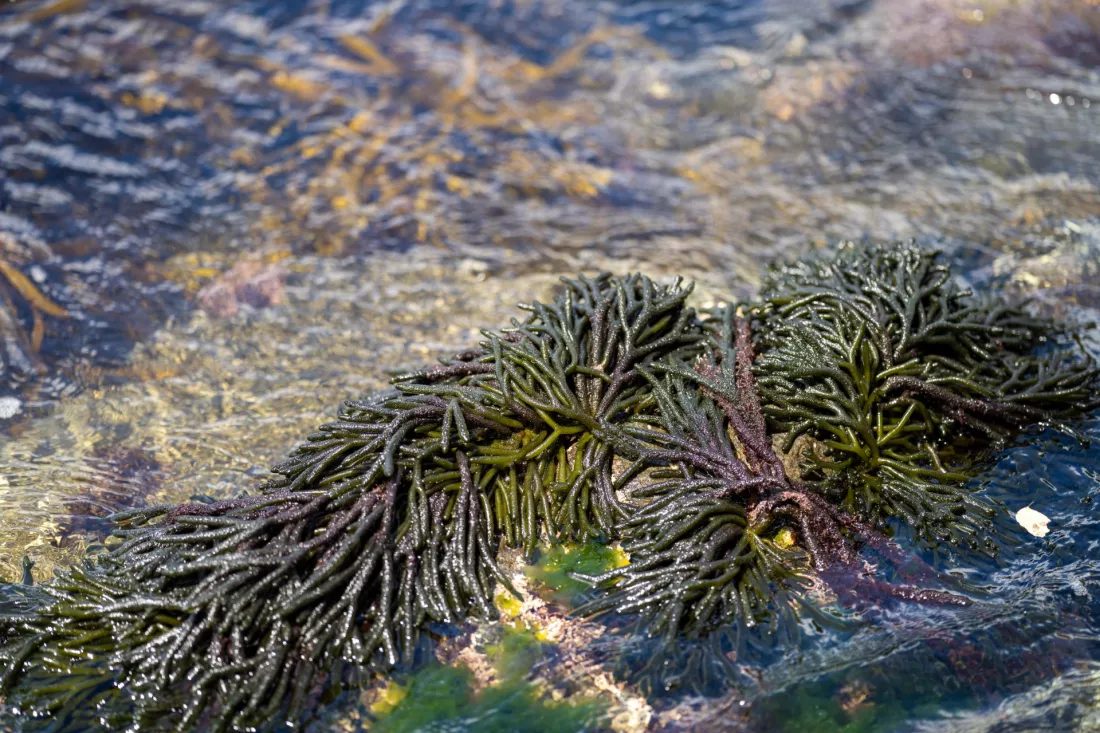
Algae are the second big theme. One project features a floating seaweed farm covering 40,000 m², with a production capacity of up to 300 tonnes of dry biomass a year.
Researchers are also looking at how algae farms could share space with offshore wind energy by placing them within arrays of wind turbines. Another line of work explores regenerative ocean farming as a model for growing seaweed on a large scale.
Because the algae sector involves many different players, two projects are building coordination platforms. These allow stakeholders along the algae production chain to share resources and work together.
The third area is the circular economy. By turning aquaculture into a circular, zero-waste industry, EU-funded research aims to put the sector at the heart of the European Green Deal. In practice, this means rethinking what happens to everything a fish or algae farm leaves behind. Projects in the pack address several aspects:
The common idea is that what used to be thrown away can become a resource for other industries.
Technology alone will not make the sector resilient. Skills, coordination and the ability to adapt to climate change matter just as much. Some projects use big data and artificial intelligence to help regions where aquaculture plays an important role adjust to a changing climate.
Others provide EU tools that help players across the aquaculture value chain coordinate better, both with one another and with related sectors. One project is focusing on people: it trains the next generation of aquaculture professionals using serious games and online platforms.
The Synergy Info Packs are designed to show how different EU funding programmes reinforce each other. In this case, the Horizon Europe projects are managed by the European Commission's DG RTD. The remaining projects are overseen by the executive agency CINEA, whose motto is “Funding a Green Future for Europe”.
European aquaculture faces a double challenge: it needs to grow while respecting climate goals. The 26 projects in the CORDIS collection tackle this from several angles, from healthier fish and alternative feed to seaweed farms at sea, zero-waste production and training. Taken together, these complementary efforts are helping to accelerate progress towards a competitive, climate-neutral and resilient aquaculture sector in Europe.
5 questions · one minute


 EN
EN 
 CS
CS DE
DE ES
ES FR
FR HU
HU IT
IT PL
PL PT
PT РУ
РУ SK
SK TR
TR УК
УК AR
AR 中文
中文